

When we CNC machine thin-walled parts, their low rigidity makes them highly susceptible to deformation. Clamping, cutting forces, heat, and vibration all contribute to this, significantly impacting accuracy. Therefore, we must optimize process parameters—like fixture design, tool parameters, and cutting amounts—to ensure quality and precision.
1. Characteristics and Machining Challenges
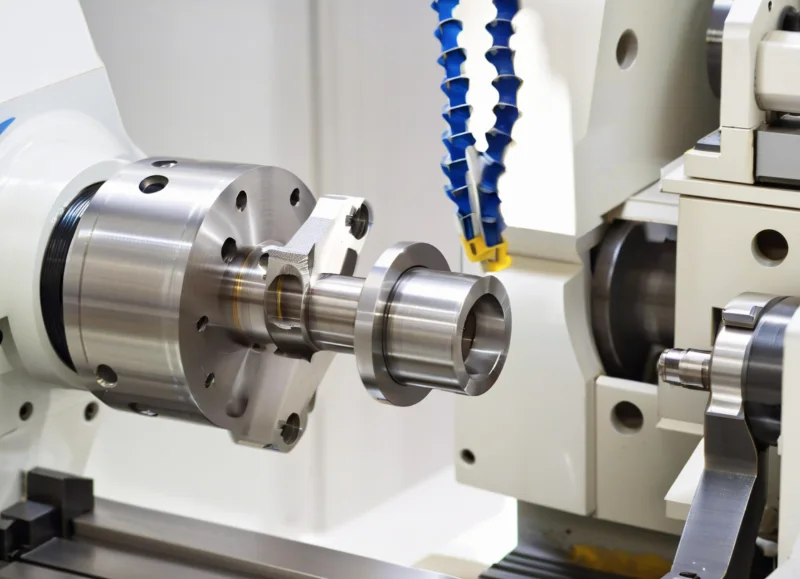
Thin-walled parts are common in demanding fields like aerospace. We define them by a small wall thickness-to-outer diameter ratio or a large curvature radius. However, their fragile structure means they easily deform during machining. Specifically, uneven clamping force, concentrated cutting heat, and cutting vibration cause elastic and plastic deformation. This leads to dimensional deviations and affects both accuracy and surface quality.
2. Factors Affecting Machining Accuracy
2.1 Force-Induced Deformation
Thin-walled parts have poor structural rigidity. They are prone to elastic deformation if we apply excessive clamping or support forces. Improperly selected or positioned clamping points also cause this. Additionally, cutting forces can induce localized deformation. This is especially true when we do not optimally set the feed speed and cutting depth. This often leads to bending and shape distortion.
2.2 Heat-Induced Deformation
Cutting heat drastically increases the local temperature of thin-walled parts. This causes thermal expansion and elastic-plastic deformation. The material often doesn’t fully recover upon cooling. This results in residual stress, dimensional deviations, and even surface ripples. This severely compromises accuracy and quality. High temperatures can also reduce surface hardness and elasticity. This leads to internal structural fatigue and ultimately fails to meet precision requirements.
2.3 Vibration-Induced Deformation
Thin-walled parts are very sensitive to radial cutting forces. These forces can alter the workpiece’s surface shape, making machining accuracy difficult to control. Furthermore, vibration during cutting, especially at high speeds, worsens part deformation. This negatively affects surface quality, appearance, and internal stress distribution, thereby increasing dimensional errors.
3. Optimizing Thin-Walled Part Machining
3.1 Fixture Design Optimization
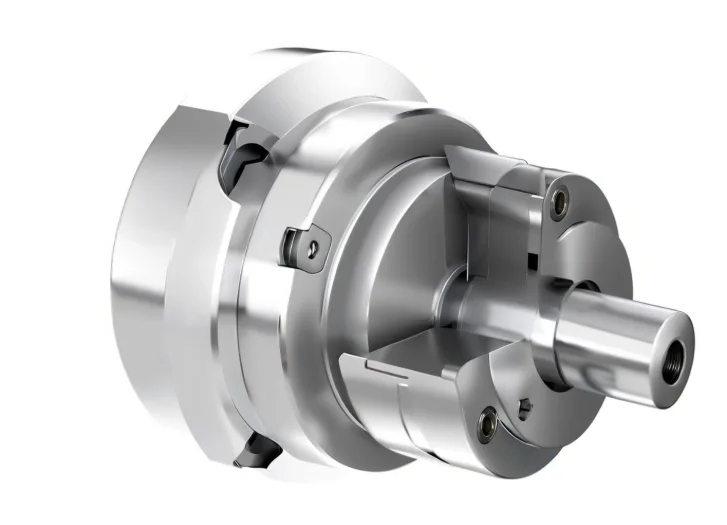
To achieve high-precision machining of thin-walled parts, we must optimize the fixture design. This involves using axial and multi-point uniform clamping to minimize deformation. We also use auxiliary washers to reduce vibration and inertia. During finishing, we should keep the spindle speed below 1200 r/min. We also set the feed speed around 0.1 mm/r to ensure accuracy and surface quality.
3.2 Tool Geometry Parameter Selection
A tool’s geometric angles, such as rake angle and main deflection angle, directly influence cutting force, temperature, and surface quality. Incorrect angles can compromise tool strength, heat dissipation, and lifespan. This ultimately leads to substandard precision. For thin-walled parts, we typically recommend a main deflection angle of 93°–97° and a secondary deflection angle of 8°–12° to mitigate stress deformation and optimize cutting.
3.3 Rational Cutting Parameter Selection
To prevent deformation and surface quality degradation from excessive cutting, we must carefully control the depth of cut for thin-walled parts. We use roughly 0.5 mm for roughing and reduce it to 0.25 mm for finishing. Concurrently, we limit the spindle speed to 1200 r/min during finishing. We also choose a feed speed of about 0.1 mm/r based on the material to ensure accuracy and suppress vibration.
4. Parameter Optimization in CNC Lathe Machining
4.1 Tool Sharpening
To mitigate vibration and thermal deformation in thin-walled part machining, we should make tools from YT15 carbide. This material offers excellent toughness and wear resistance. We keep the cutting edge sharp and notch-free. Precision-designing tool geometry—with a main deflection angle of 93°–95°, a secondary deflection angle around 8°, a rake angle around 10°, and a tool tip chamfer of R0.2—helps effectively disperse cutting heat and reduce cutting forces.
4.2 Cutting Parameter Selection
4.2.1 Back Cutting Depth
For thin-walled parts, the cutting depth should be moderate to ensure precision and minimize deformation. Roughing typically uses a back cutting depth of about 0.5 mm. Finishing requires reducing it to approximately 0.25 mm. For easily deformable areas, a back cutting depth of less than 0.5 mm generally offers greater stability.
4.2.2 Spindle Speed
Excessive spindle speed for thin-walled parts can cause chatter and deformation. Thus, during finishing, we should maintain the spindle speed around 1200 r/min. We combine this with considering material properties to ensure stable cutting and minimize vibration-induced errors.
4.2.3 Feed Speed
Feed speed is critical for the machining accuracy of thin-walled parts. A speed that is too high increases deformation risk, while a speed that is too low can easily cause thermal deformation. Therefore, when finishing thin-walled parts, we generally recommend a feed speed of around 0.1 mm/r. This balances the cutting load and ensures dimensional accuracy and surface finish.
4.3 Workpiece Clamping
4.3.1 Using a Central Fixture for Inner Hole Processing
For precise and stable inner hole machining of thin-walled parts, we need a specialized fixture. We secure this fixture with a three-jaw self-centering chuck. We then use its threaded exterior and internal stepped structure to axially position and firmly clamp the part. This effectively prevents deviation and vibration during machining.
4.3.2 Using a Central Fixture for External Cylindrical Machining
Given the low rigidity and easy deformation of thin-walled parts, fixture design should incorporate a three-jaw self-centering chuck for secure mounting. We then reliably clamp the outer circumference with washers and locking nuts. This evenly disperses clamping force and reduces localized stress. This minimizes processing deformation risks and achieves high-precision clamping.
5. Conclusion
Achieving high-precision machining of thin-walled parts demands a comprehensive approach. Beyond preventing deformation from excessive clamping, we must scientifically control spindle speed, back-cutting amount, and feed speed to enhance stability. Optimizing tool sharpness and cutting edge design further minimizes heat buildup and cutting force fluctuations, significantly improving overall machining accuracy. Ultimately, successful CNC lathe machining of thin-walled parts hinges on a deep understanding and synergistic application of these critical process parameters and design considerations.